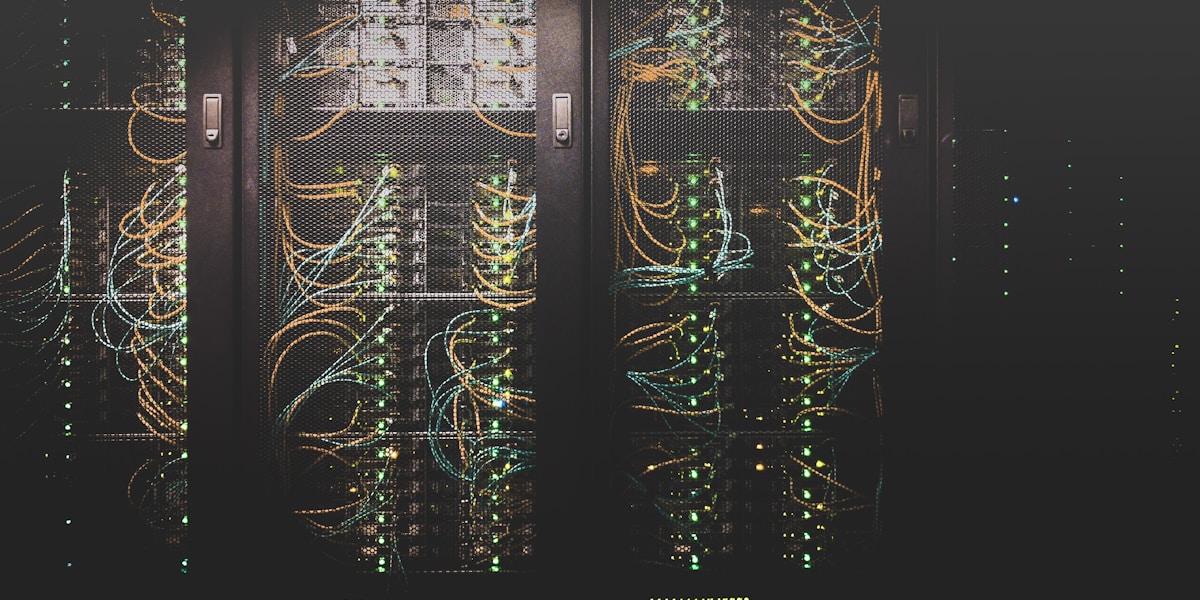
SAN FRANCISCO —Quarterly capital expenditure disclosures across Microsoft, Alphabet, Amazon, and Meta have reached a scale previously reserved for national petrostates and transcontinental railroads. Over the trailing four quarters, the Big Four hyperscalers committed more than $240 billion to property, plant, and equipment—predominantly liquid-cooled AI accelerator clusters, custom optical networking fabrics, and long-term nuclear and geothermal power purchase agreements. For CFOs and chief technology officers across digital publishing and programmatic ad tech, this historic capital cycle has created a sharply bifurcated infrastructure market.
On one side of the ledger, electricity and high-bandwidth memory (HBM3e) constraints keep large-cluster GPU instances priced at a premium. On the other side, hyperscalers eager to maximize utilization on their standard data center footprints—and competing fiercely with specialized edge networks—have aggressively discounted custom ARM64 CPU compute and zero-egress object storage.
Power Grid Bottlenecks and Inference Cost Deflation
Data from the U.S. Energy Information Administration (EIA) and the International Energy Agency (IEA) confirm that data center electricity demand in major Northern Virginia, Dublin, and Frankfurt availability zones is growing faster than utility transmission upgrades. Consequently, cloud providers have introduced steep spot-pricing differentials between latency-insensitive batch workloads (routed to hydro- and wind-rich regions in Scandinavia, Quebec, and the Pacific Northwest) and real-time edge inference.
“By migrating our OpenRTB auction routers to custom 64-bit ARM instances and running batch archival embeddings during off-peak renewable grid windows, we cut cloud infrastructure COGS from 18% of revenue to 11.4%.”
For media companies, this pricing divergence reinforces the architectural case for distributing personalization to CDN edge workers and offloading lightweight embeddings to client WebGPU shaders. Paying $3.50 per hour for a cloud GPU to classify article sentiment on every pageview is financial malpractice when a quantized classifier can run once at CMS publication time for $0.0002.

Eliminating the Cloud Egress Tax Under EU Data Act Rules
A second structural tailwind for publisher gross margins stems from regulatory enforcement of cloud switching provisions under the European Union Data Act and competitive pressure from zero-egress storage networks (such as Cloudflare R2 and Backblaze). Historically, hyperscalers charged $0.08 to $0.09 per gigabyte in bandwidth egress fees whenever a publisher or SSP transmitted video segments or bid logs to an external CDN.
- Zero-Egress Interconnects: Negotiating private peering fabrics and Bandwidth Alliance agreements eliminates up to 82% of cross-cloud data transfer fees.
- ARM64 Fleet Migration: Recompiling Go and Rust Prebid Server clusters for ARMv9 silicon delivers 40% better price-performance and lowers Scope 3 carbon intensity.
- Committed Use Arbitrage: Blending 3-year Compute Savings Plans for baseline traffic with spot instances for breaking-news spikes reduces blended unit cost by 46%.
- Gross Margin Expansion: Public ad-tech equities demonstrating declining cloud COGS per million auctions trade at a 3.5x EV/EBITDA premium.
Reading the Depreciation Cycle in Public Tech Filings
As hyperscalers extend server useful-life depreciation schedules from four years to six years in their SEC Form 10-K filings, software and media operators that architect portable, hardware-agnostic workloads are capturing the surplus compute dividend without bearing the balance-sheet depreciation risk.